Sort by when you’ll drink it, not by colour
Most people split red from white. Split by time instead, into three zones:
- Drink now. Front and at eye level, where your hand goes without thinking.
- Within a year or two. The middle shelves.
- Long keepers. At the back and the bottom, where it’s coolest and nobody disturbs them.
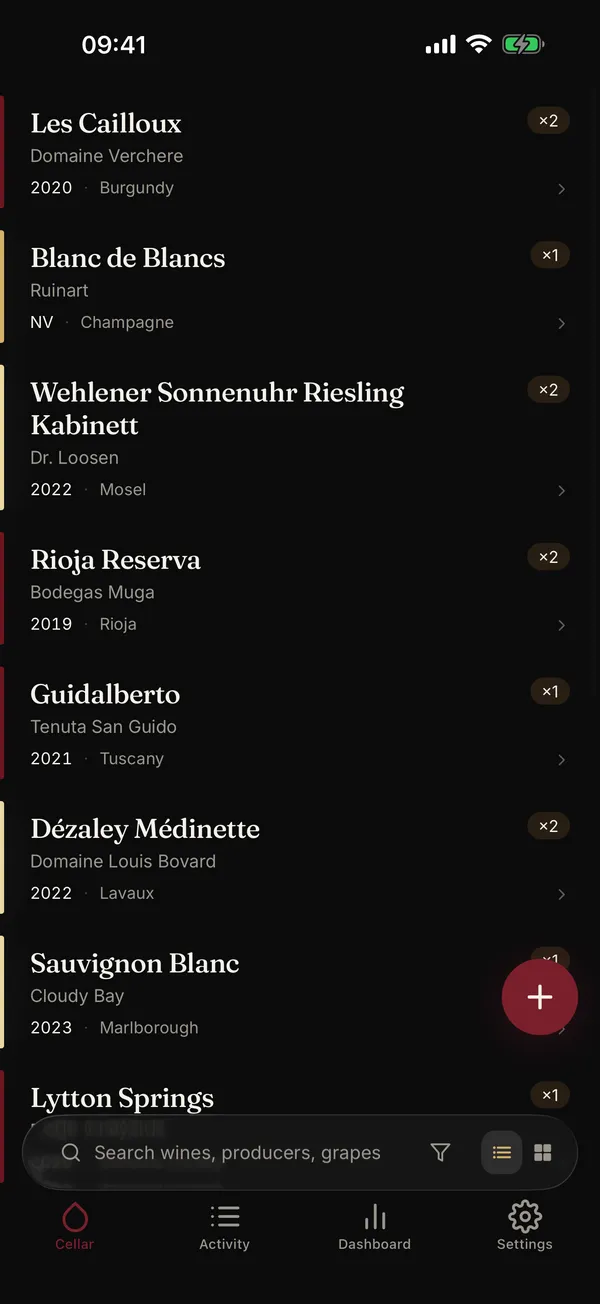
Reach for a bottle and you reach for one that’s ready, while the Barolo you’re saving isn’t jostled every time you open a Tuesday Côtes du Rhône. Inside each zone, group by region or producer, so you can see at a glance how much Burgundy you really have.
Get the most from a wine fridge
A single-zone fridge is storage: set it to 12 or 13°C and keep everything there, then chill whites and sparkling properly before you serve them. With two zones, give the colder one to whites and sparkling you’ll open soon, and the warmer one to reds and to anything you’re keeping for years.
The kitchen fridge is fine for a few days, not a few months. It’s too cold, too dry and opened too often, and a cork that dries out lets air in.
Cool, steady, dark and still
- Cool. Between 10 and 16°C (50 to 60°F) for the long term; around 13°C (55°F) is the classic cellar temperature. Above 24°C (75°F) wine ages fast and badly.
- Steady. Swings in temperature work on the cork and pull air in. A steady 16°C beats a place that drops to 10 at night and climbs to 20 by day.
- Dark. Strong light, sunlight above all, damages wine. Clear and pale bottles suffer most.
- Still, and on its side. Bottles under cork lie down so the cork stays moist. Keep them away from the vibration of a washing machine or the top of the fridge.
Give every bottle an address
When a rack holds sixty bottles, “somewhere in the rack” isn’t an address. Two levels cover most homes: the place (the cellar, the kitchen fridge) and the part of it (rack B, the top shelf), plus a note for the exact slot when the rack is deep.
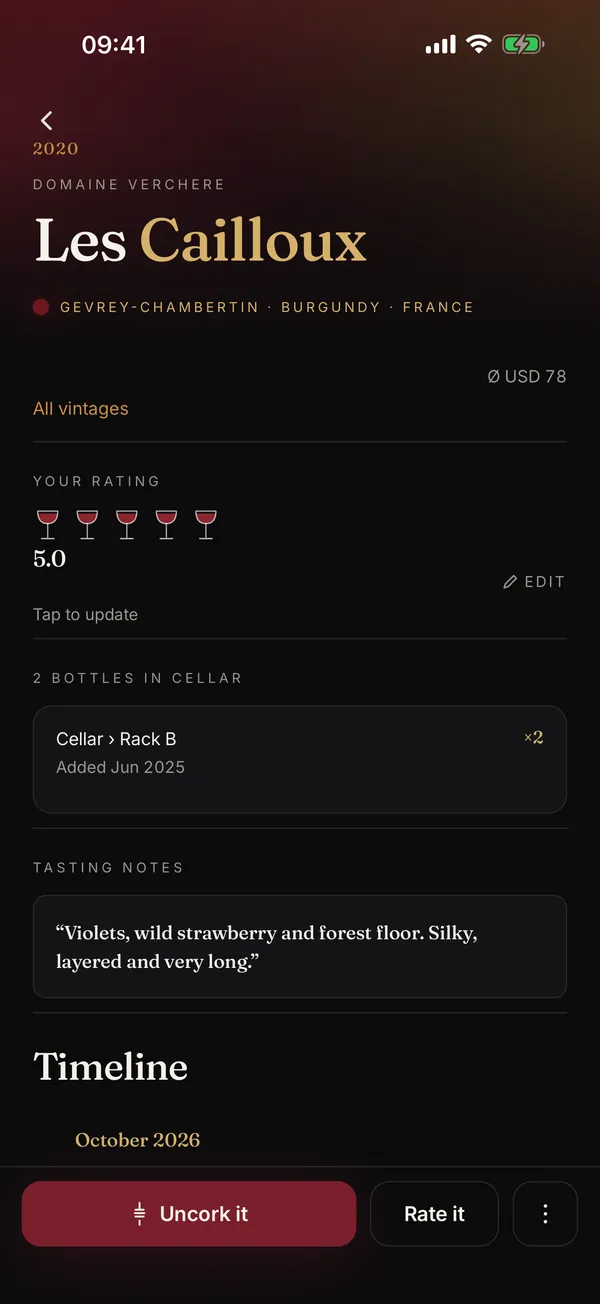
In Botto that’s a location, a spot and a position note on every bottle. Name spots after something you can see: “Rack B” if the rack is labelled, “left rack” if there are two. Then the wine page tells you where to reach before you open the door.
Rotate, and taste early
New bottles of a wine you already have go behind the older ones, so you drink in order. When you buy several bottles of something to keep, open one early. You’ll learn what it tastes like young, and you’ll know better when to come back for the next.
Keep the list as true as the shelves
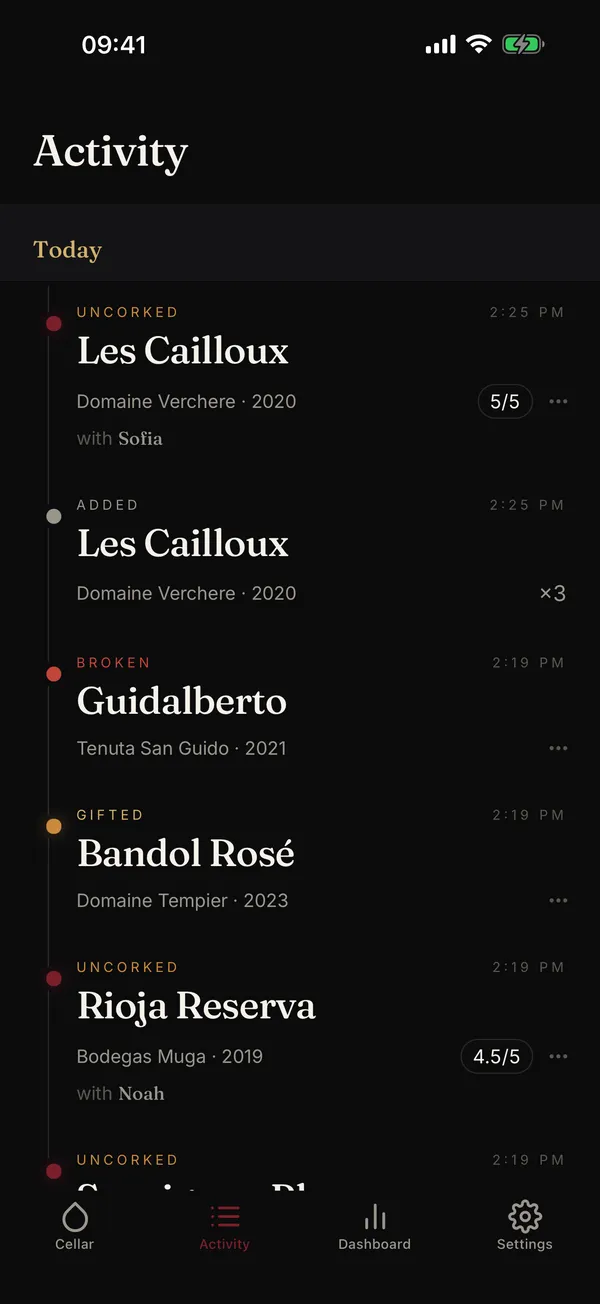
Log a bottle the day it leaves: opened, given away or broken. In Botto, Uncork it keeps your rating, a tasting note, who you drank it with and what you ate, and Activity shows everything that came in and went out. Every few months, walk past the rack with Botto open and check the counts. A list you trust is a list you keep using.
Botto is coming to iPhone. Get it the day it launches.